Commercial Roof Seam Failure Repair in Coral Springs, FL
|
|
|
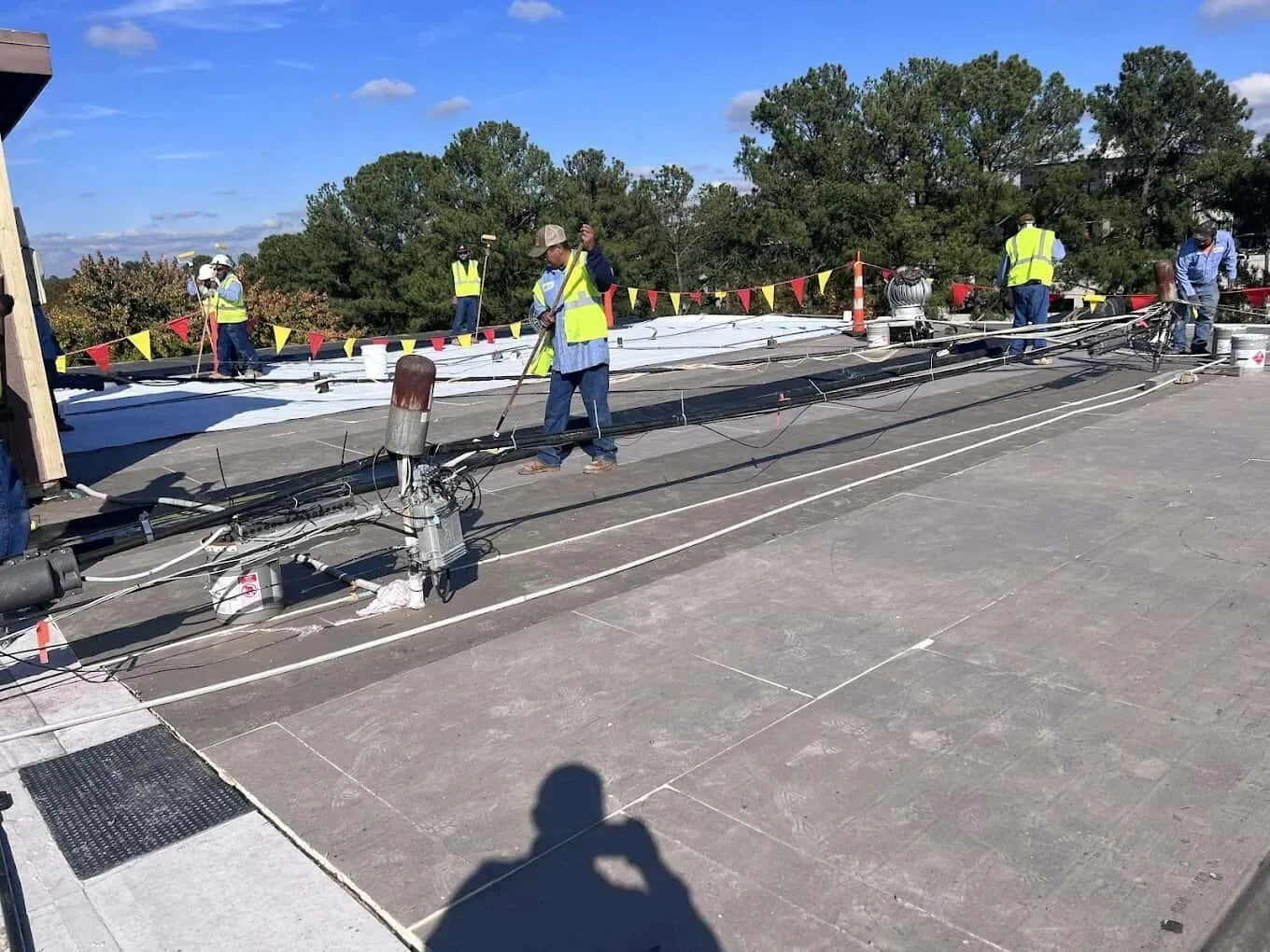
| A seam can part by a few inches or open along a longer run, and the repair depends on how that roof system joins its sheets or panels. We inspect the separation, nearby laps and attachment pattern, then determine whether the surface can be repaired in place or needs a controlled opening. The visit records the seam’s location, apparent extent and surrounding condition instead of treating every visible line as the same defect. In Coral Springs, seasonal downpours and South Florida heat put demands on roof laps, seams and close-in timing. We inspect the affected joint and its surrounding attachment to identify the failure at this property. We confirm the address, leak timing, earlier work and approved access with the property contact. A building near Coral Springs Commerce Park or Coral Square Mall needs a property-specific roof route and work window. |
Map the opening before choosing a repair | We document where the seam begins and ends, its direction, width where measurable, and whether water or debris is present. The building contact can identify which interior area is affected and whether the condition is new or has been patched before. We separate those reports from physical observations and mark any point that could not be reached safely. A sketch or overview photograph can make the repair boundary clear to facilities staff. Before roof entry, an authorized representative confirms the hatch or ladder, escort, restricted areas, and any equipment that cannot be moved. Near Sample Road or the Coral Springs Auto Mall, route and staging rules still depend on the actual address. We ask where a vehicle may stop and whether a tenant notice is required. If the split permits current water entry, a temporary response can stabilize exposure while a permanent seam method is selected. |
Identify the system and failure mode | For a membrane roof, the seam may rely on heat-welded or adhered laps; for a metal roof, the connection may involve a formed seam, clip or fastener. We identify the system where it can be verified and examine the failed portion for contamination, loss of bond, movement, puncture, corrosion, incompatible sealant or prior patching. We avoid assuming a weld problem solely because two membrane sheets have separated. The adjoining field matters too. We inspect nearby attachment points, penetrations and transitions for movement that may have stressed the joint. If the membrane is brittle, wet below the surface or poorly bonded outside the visible opening, a small repair may not represent the full condition. We explain when a test or small opening is needed to confirm substrate and moisture. A commercial roof inspection can record broader accessible conditions; confirmed water entry can be addressed through commercial roof leak repair. |
Limit short-term water entry | Where a seam is open and safe to reach, we consider a temporary measure that will stay compatible with the surface and avoid trapping water. We do not place a loose cover across a drainage channel or use a quick seal that prevents the detail from being examined later. The contact receives the location of the protection, how long it is intended to remain and what observation should trigger a follow-up. If weather or roof condition makes the seam unsafe to work, we state that constraint rather than leaving the building team to assume the area is secure. Temporary protection may reduce exposure, but it does not establish a permanent bond or reveal the condition below the membrane. Before repairing, the surface may need to be dry and free from contamination. We preserve a photograph of the initial split where possible so the final record can show how the defect changed. |
Restore continuity along sound material | The repair scope states the system and seam type, surface preparation, repair width and length, materials, and how the new bond or mechanical connection will engage sound existing material. A membrane lap may require cleaning, drying and welding or compatible reinforcement; a metal roof may need a formed or fastened correction based on its profile. We identify any removal needed to reach reliable substrate and how the new work will tie into the field. We do not extend a patch over a questionable lap simply to make the visible line disappear. If similar openings appear in several areas, the owner should compare a series of local repairs with broader corrective work. commercial roof repair can define connected defects, and commercial roof replacement may be considered if inspection shows widespread system failure. A leak that originates at an adjacent wall detail may need flashing failure repair as a separate scope. |
Protect access to occupied areas | Seam repair can place technicians near rooftop units, skylights or occupied rooms and may temporarily limit a roof route. The property contact sets access hours, escort rules, equipment clearance and tenant notification. Work at a Coral Springs Commerce Park facility may intersect loading or dispatch operations; a retail roof near Downtown Coral Springs may have public entrances below. We use each building’s actual operating plan to set the sequence. For a multi-zone roof, we can mark the seams to be completed, leave and return areas visible in the schedule, and identify where the contact must approve a wider opening. If the repair is above sensitive equipment or active space, the property team can help choose a work window and interior precautions. A roof access and phasing plan may help for larger scopes. Work in the Coral Springs Commerce Park area can be arranged with the site representative. |
Check the repaired length and retain the evidence | After the repair, we inspect the completed joint and its tie-ins, then note how much seam was addressed and what remained outside the scope. The closeout lists materials, visible limitations, temporary coverings removed or retained, and any recommended observation. If a test was possible, its method and result belong in the record. If the assembly could not be tested under the conditions present, that limitation is explicit. Photographs that show the full run and a close view of the connection help maintenance staff recognize the repaired area later. They also reduce confusion if a separate leak develops nearby. The record does not represent hidden portions that were not opened or inaccessible roof zones. A roof condition report can preserve that history; if water was holding in the seam area, ponding-water evaluation can separately assess the drainage condition. |
Commercial Roofing Questions | Can a separated seam be sealed without replacing the roof?A localized opening may be repairable when the surrounding material and substrate are suitable. We inspect the adjacent bond and attachment before deciding whether a small repair represents the actual defect. How do you know whether a membrane seam is still repairable?The roof system, surface condition, bond outside the split and moisture below it all matter. We document what can be verified and identify testing or opening needed to resolve uncertainty. Will seam repair stop a leak immediately?A confirmed opening can be repaired, but water may have another entry point or travel from elsewhere. We report the tested area and do not promise results beyond the inspected scope. Can roof traffic cause a seam to open?Traffic can contribute to wear or damage, but the visible separation alone does not establish its history. We note nearby access paths and physical evidence without assigning an unsupported cause. What should I send before scheduling?Provide the address, roof system if known, leak or opening location, photos, prior repair records and access contact. The information helps prepare the visit and remains separate from findings. |
Have an open seam assessed | Send the property address, reported seam location, leak history and roof access contact. We can inspect the connection, document its extent and define a repair method appropriate to the verified system. Request a Roof Assessment 555-555-5555 |
|
|
REQUEST AN ASSESSMENT
 |