Commercial Flashing Failure Repair in Coral Springs, FL
|
|
|
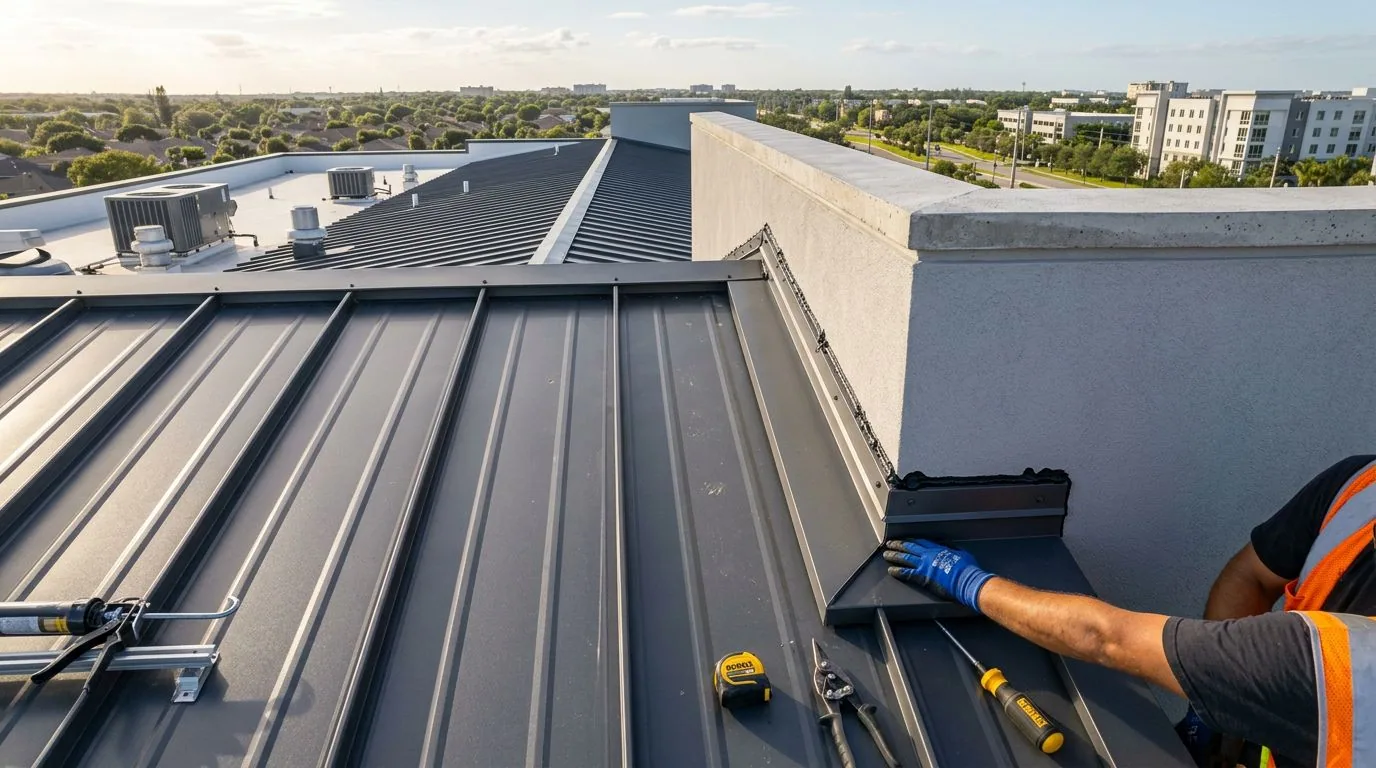
| A leak beside a wall, curb, pipe or rooftop unit often leads back to a transition, but the interior mark does not identify which connection failed. We inspect the flashing and the adjoining roof surface, then follow the likely water path toward the reported area. The work record identifies the visible separation, movement or material failure and states what could not be confirmed without opening the assembly. Coral Springs has a wet season with heavy rain and regional thunderstorm activity, so an open transition can become a practical building concern quickly. Seasonal conditions do not prove that a particular detail has failed. We confirm the building address, reported leak location, recent maintenance and safe roof access with the property contact. A storefront near Coral Square Mall or an office along University Drive needs its own entrance, staging and operating instructions before a crew arrives. |
Pin down the reported transition | We ask whether the water appears near a parapet, rooftop unit, skylight, pipe, curb, doorway canopy or another edge. The contact may have photographs, ceiling plans, prior repair notes or information about when the leak appears. We capture those details as reports, then verify which roof features correspond to them. When more than one possible source exists, each candidate is documented rather than turning a likely location into a confirmed cause. Roof access is arranged through an authorized representative who can identify the hatch or ladder, escort rules, restricted zones and any tenant notification requirement. At a property close to Downtown Coral Springs or Coral Springs Commerce Park, the neighborhood name does not identify the permitted service entrance. We confirm where a vehicle can stop and whether roof equipment must remain clear. If water is actively entering, commercial leak repair can trace and address the reported path while the flashing scope is evaluated. |
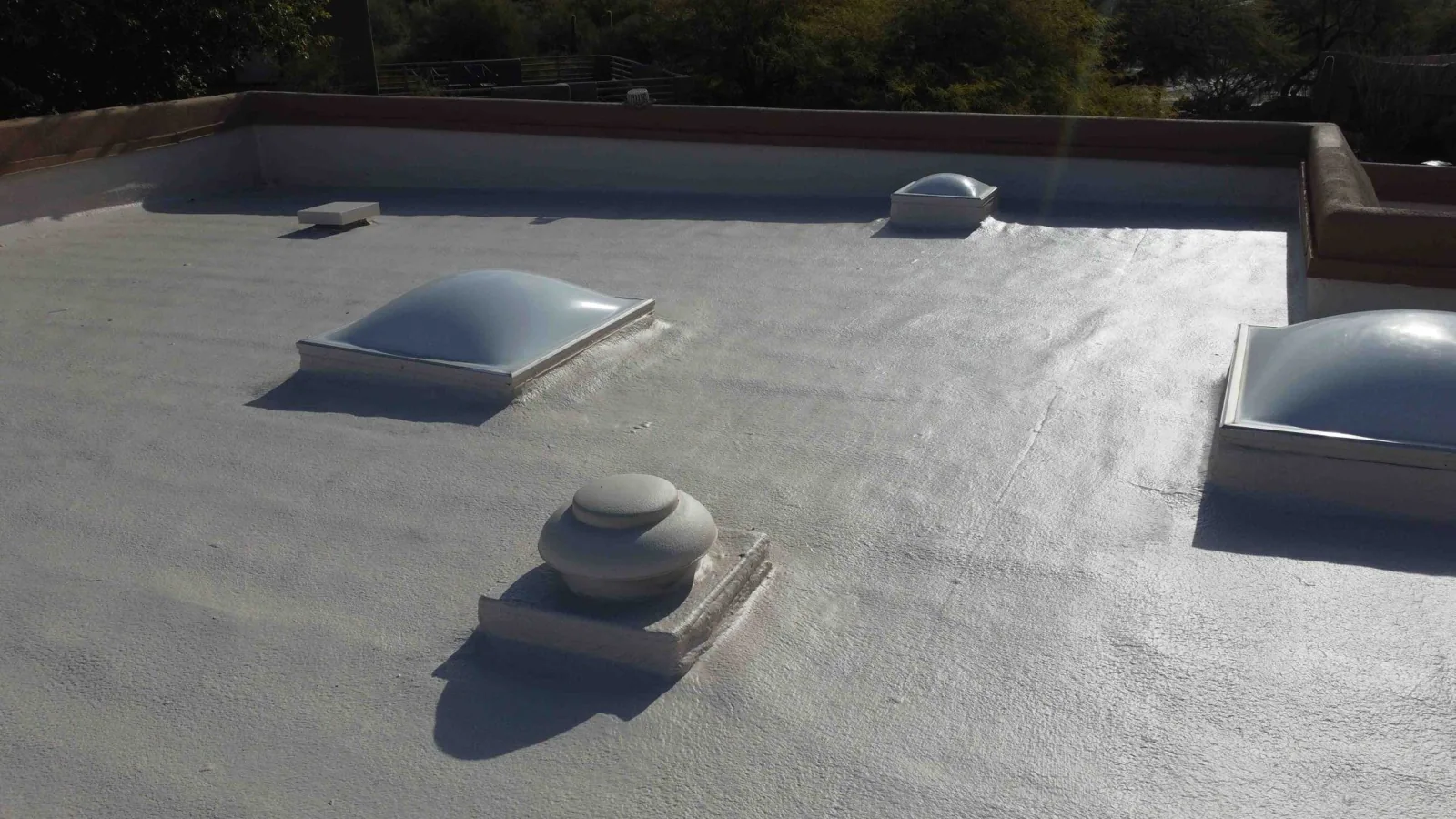
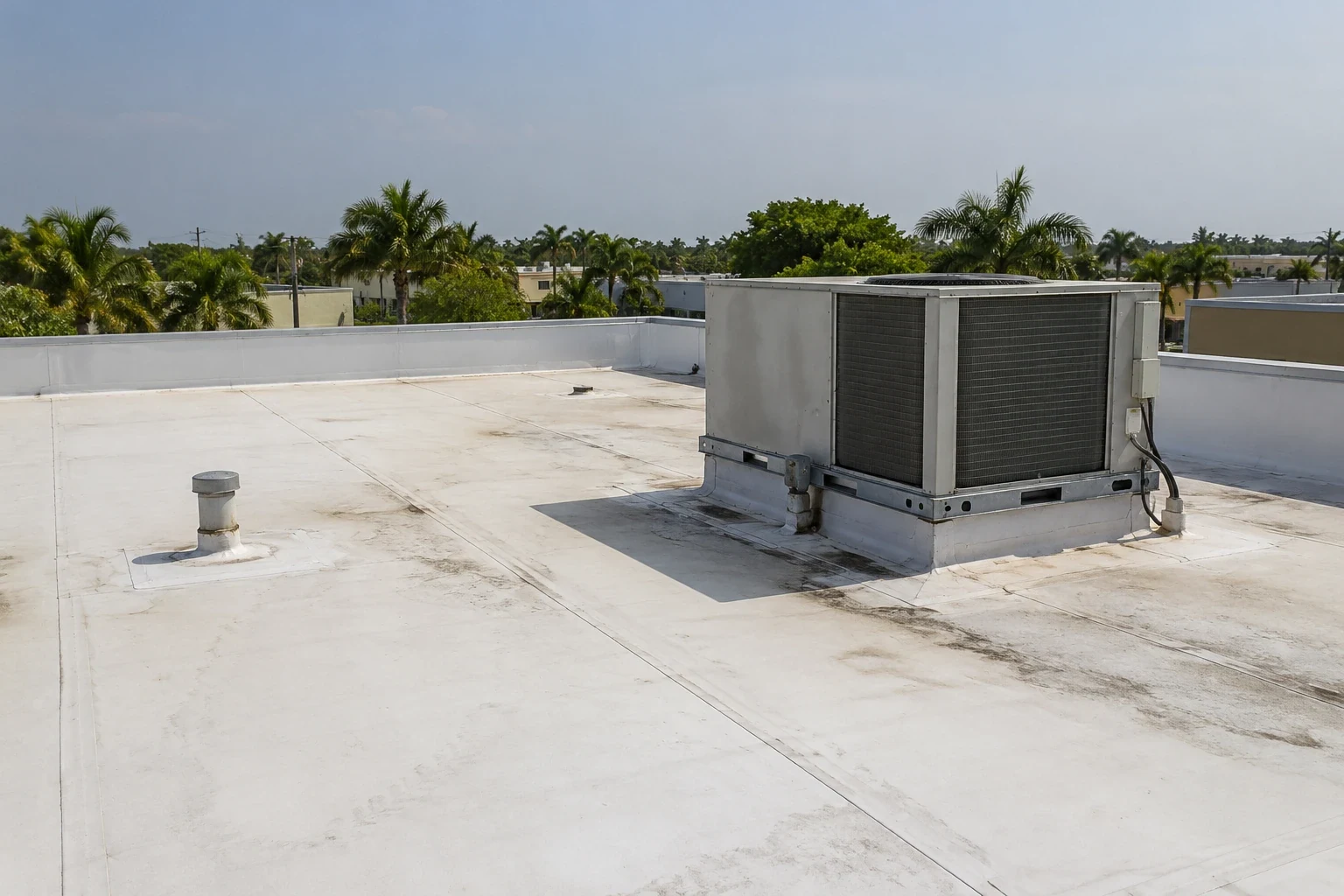
Read the flashing as a connected assembly | At the transition, we examine how the flashing terminates at the roof field and the vertical surface. We look for an open lap, cracked or separated sealant, loose counterflashing, corrosion, a pulled fastener, movement at a curb, or membrane that has detached from its substrate. A bead of sealant alone does not show how the concealed connection was made. We photograph the detail and note the adjoining materials so the repair can be matched to the actual assembly. We also inspect nearby seams, drains and penetrations for a second path that could explain the interior symptom. If a wall cavity or curb hides part of the detail, the report names that limit and recommends a safe way to verify it. Water can travel along a deck or insulation layer before it appears inside; the ceiling stain is a clue, not a roof map. A commercial roof inspection records the connected details and any access limits. |
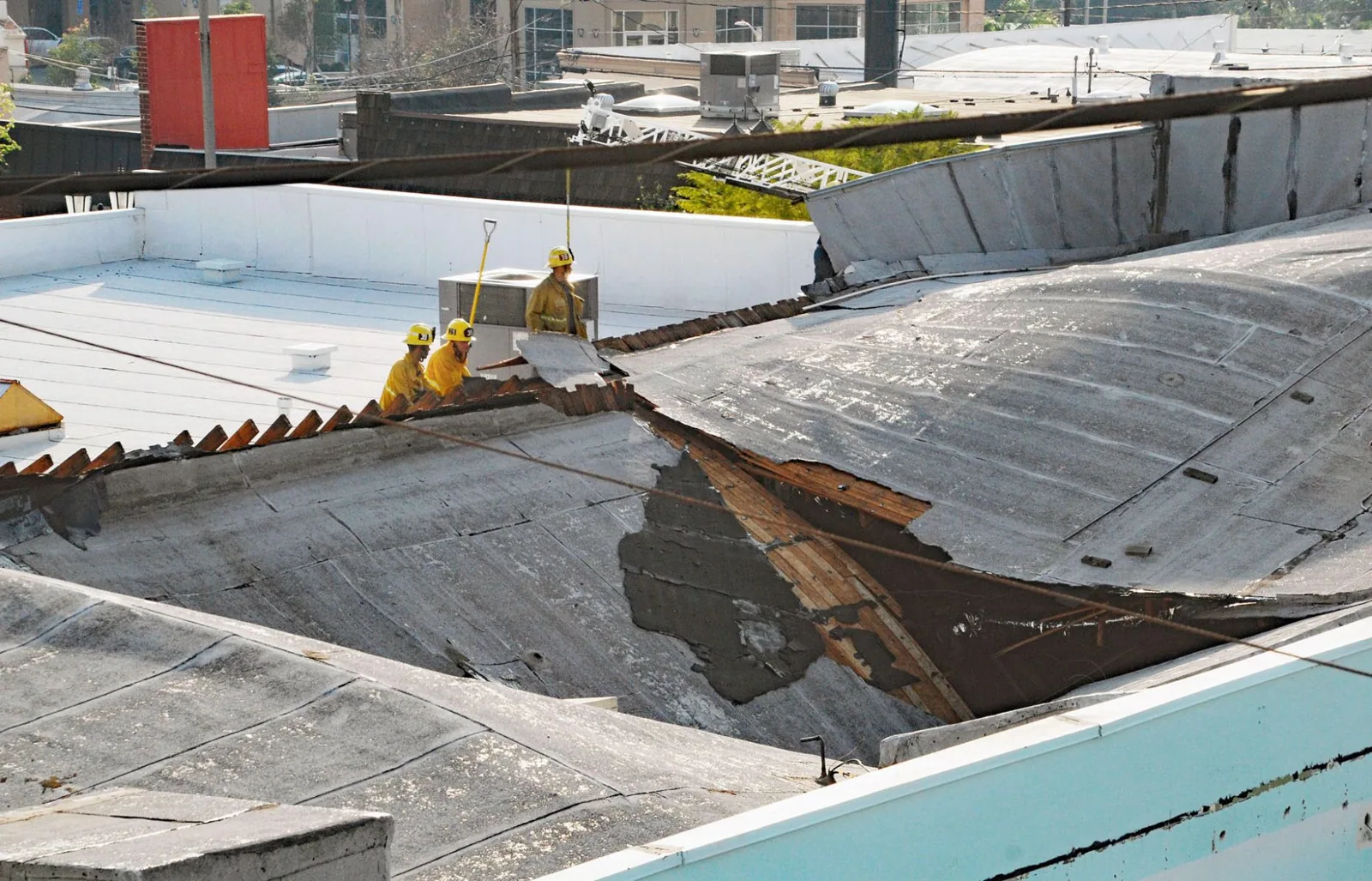
Control exposure without hiding the failure | When the opening permits immediate water entry, we consider temporary protection that can be secured safely and removed without damaging adjacent materials. The method must suit the roof surface and transition. It cannot obstruct drainage, conceal a loose component that needs inspection, or leave an unsecured edge. We note its location, purpose and expected follow-up so the building contact knows what is temporary. If the detail is wet, unstable or inaccessible, we explain why a quick surface seal may not be appropriate. A temporary bead over an unknown connection can trap moisture or make a later repair harder to inspect. We may need a dry work window or authorization to remove a small section and determine where sound material begins. Any scope expansion is shown to the contact before the crew proceeds. Protection controls short-term exposure; it does not replace rebuilding the flashing connection. |
Rebuild the failed junction | The written scope identifies the transition, preparation, compatible flashing materials and how the repair ties into the roof field and wall or curb. Depending on the assembly, work may involve removing loose sealant or patch material, resetting counterflashing, repairing a membrane upturn, replacing a damaged curb detail, or fastening a new edge component. The boundary should reach sound material and preserve the intended drainage route. Where concealed layers cannot be assessed from the surface, we state what opening or test is needed before final quantities are known. A repair should not bridge over loose or wet material without a reasoned scope. If the transition failure is part of broader membrane deterioration, commercial roof repair can include related defects; extensive age or system-wide breakdown may warrant comparing commercial roof replacement. A split at the adjoining field may need seam failure repair as a distinct task. |
Make the repair workable for occupants | Flashing work may require access beside rooftop units, tenant windows, loading areas or a public-facing entrance. The building contact identifies hours with the least disruption, safe interior routes, equipment clearances and rules for moving materials. A medical property near Broward Health Coral Springs may have access protocols unlike those at retail near Waterways Shoppes. We plan around the actual site instructions and do not infer operating hours from a facility category or place name. Where a transition is above an occupied room, the contact can confirm whether protective coverings or a short interior restriction are needed. We explain if odor, noise or temporary staging could affect an entrance before starting. For multi-tenant buildings, one person should relay schedule changes and approve any added work after opening a concealed area. A plan for occupied roof work can support larger phased scopes; service along the University Drive Corridor can be coordinated with the property representative. |
Verify the repaired transition | At closeout, we check the completed flashing connection, adjacent laps and exposed repair boundary. The notes identify materials used, photographs taken, any temporary measure removed, and the next observation recommended. If a concealed section was not opened, that remains a documented limit. A successful surface repair is not a statement about unseen wall or deck conditions. Keeping a dated record helps maintenance staff distinguish a repaired junction from a new leak nearby. The report can identify the exact roof zone rather than relying only on a tenant description such as “above the west office.” If additional water appears after a later rain, the contact can compare its location and timing with the completed work. roof condition reporting can preserve the detail history, while ponding-water repair addresses a drainage issue if one is separately observed. |
Commercial Roofing Questions | Can flashing be the source even when the leak appears elsewhere?Water can move within roof layers or along framing before it becomes visible inside. We trace accessible details and label a suspected source separately from a confirmed defect. Is new sealant enough to repair failed flashing?Only if the inspection shows that the connection and adjoining materials are suitable for that method. A loose or concealed failure may require removal and rebuilding to sound material. Do you replace all flashing during a roof repair?No. The scope follows the transitions that show a defect or need to be disturbed to complete the repair. Other accessible conditions can be recorded separately. Can you inspect a flashing detail during business hours?The property contact sets the access window, escort and operating limits. We coordinate the roof route and any work over occupied areas before the visit. What information helps diagnose a flashing leak?Provide the address, interior location, dates when water appears, photographs, prior repair records and roof access details. Those observations help direct inspection but do not replace it. |
Schedule a flashing failure review | Share the roof address, reported interior location, relevant photographs and contact for roof access. We can inspect the transition, identify visible limitations and document a repair boundary. Request a Roof Assessment 555-555-5555 |
|
|
REQUEST AN ASSESSMENT
 |