Commercial Acrylic Roof Coatings in Coral Springs, FL
|
|
|
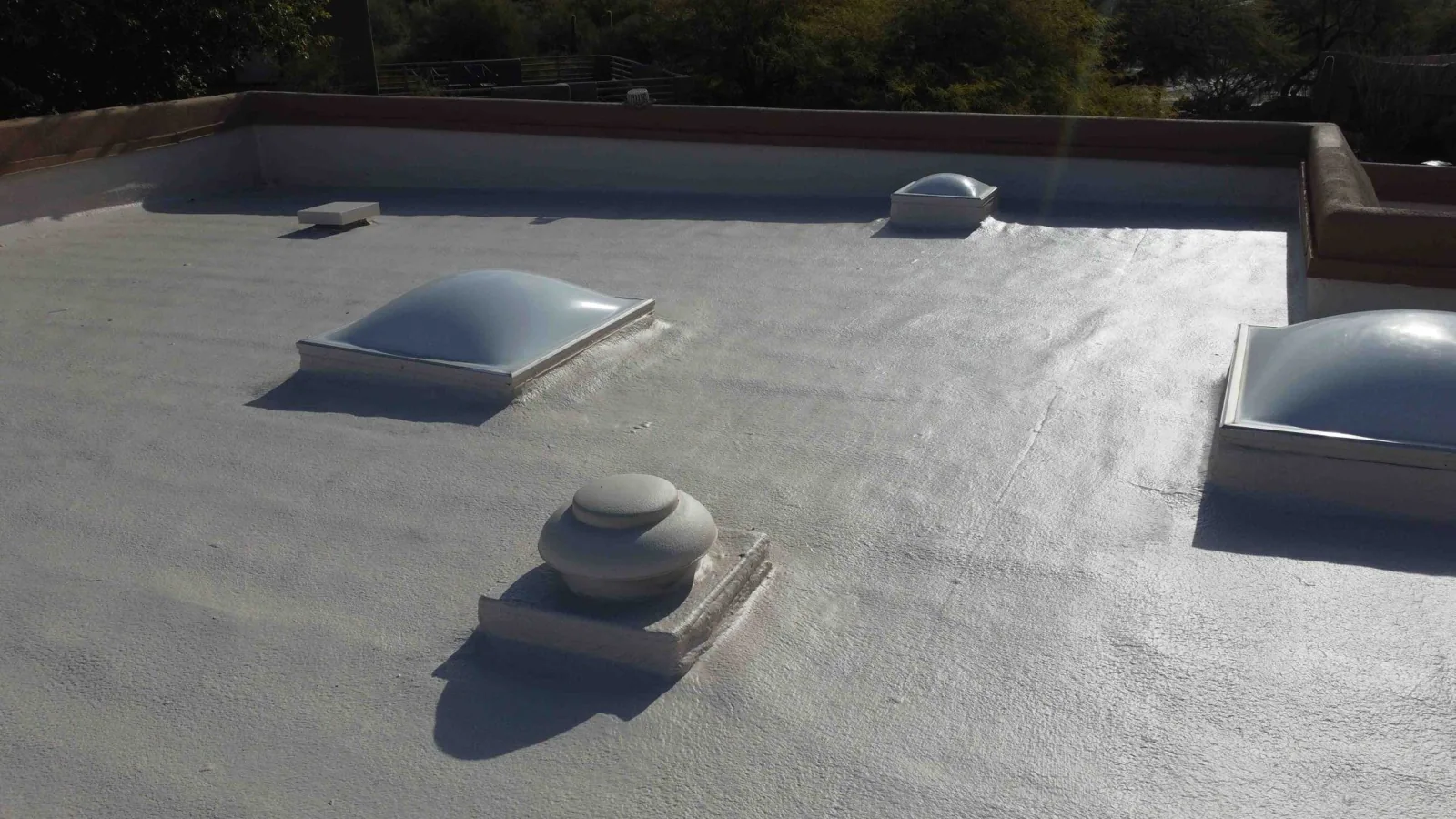
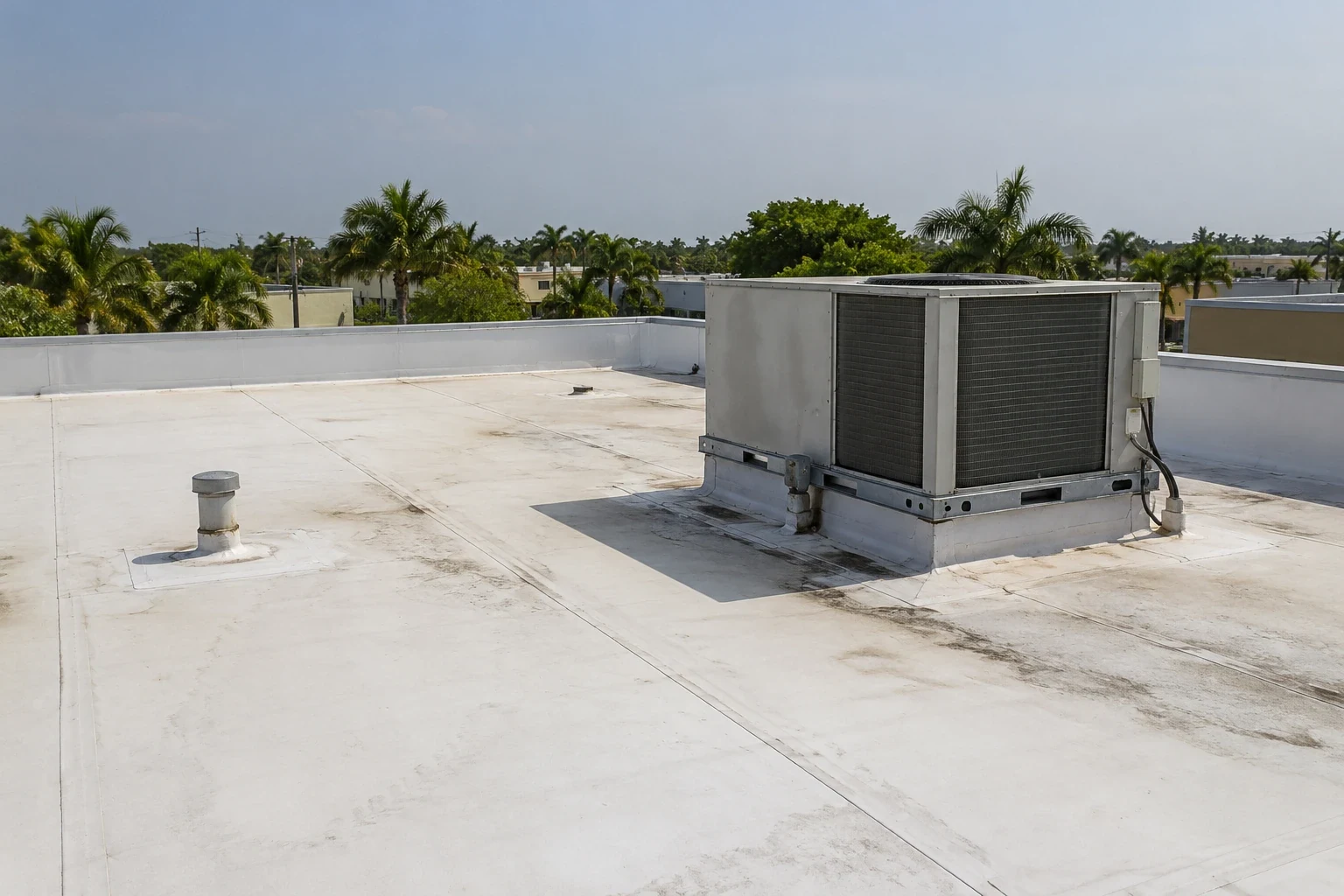
| A chalky acrylic finish near a roof edge can indicate coating wear, but the surface alone does not tell us whether the base roof is sound. We inspect the coating, seams, flashings, drains and previous repairs before discussing another application. Loose or wet material needs correction, and the coating system must be compatible with the existing surface. We mark areas for preparation and identify the transitions that need separate reinforcement or rebuilding. Coral Springs, FL has high summer heat and a long wet season with periods of heavy rain. Acrylic application needs a suitable dry window and protection while the coating cures. At a site near Coral Springs Commerce Park or the Coral Springs Auto Mall, we confirm access, staging and operating limits with the property contact before scheduling work. |
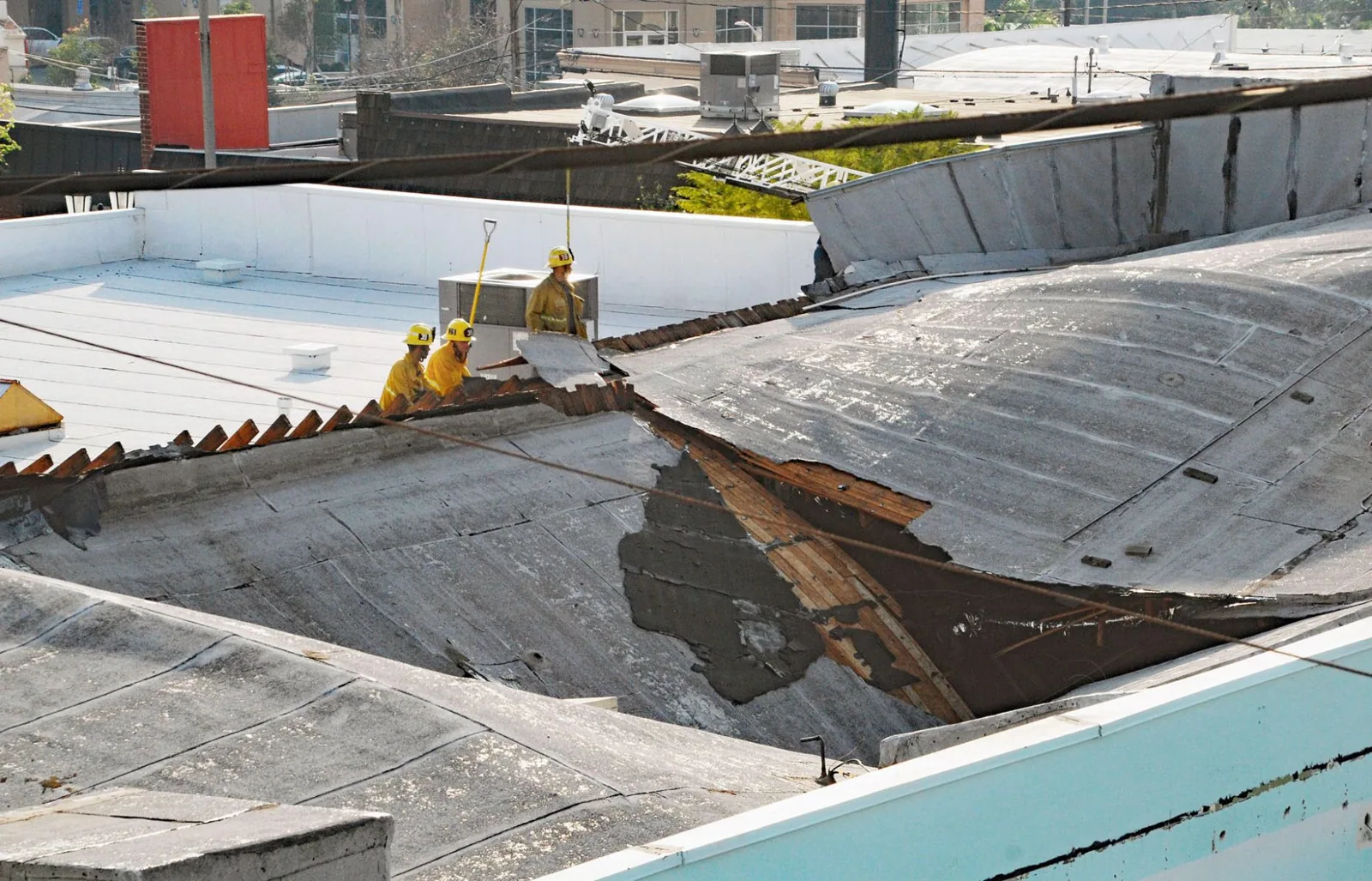
Check the base roof and prior coatings | We inspect for chalking, cracks, blisters, loose coating, exposed substrate and ponding marks. Seams, curbs, pipes, skylights, parapets and drains receive separate attention because field coating does not correct a failed transition. We review prior coating records when available and identify whether testing is needed to check adhesion or compatibility. If moisture or deterioration exists beneath the surface, the repair scope needs to address it before recoat. A commercial roof inspection can document visible conditions and inspection limits. When concealed moisture is a concern, infrared imaging may help locate areas for further review under suitable conditions. Results need interpretation and may require test cuts to confirm layers. We distinguish the image pattern from a verified material condition before deciding whether coating is appropriate. |
Prepare and prime the surface | Preparation begins with removing loose coating and debris, cleaning the receiving area and allowing it to dry. We repair failed seams and flashings before applying field material. Primer, reinforcement and coating type follow the selected product and project specification. If existing layers are incompatible or cannot provide a stable bond, we identify removal or another assembly option instead of adding material to a weak surface. Adhesion checks can help evaluate representative areas, but a test describes only its location. We document test points and the preparation used, then confirm that repair edges and transitions can receive the new coat. At a curb or drain, reinforcement may be required before field application. A roof coating restoration review can set preparation, repair limits and application sequence for the inspected roof. |
Rebuild seams and roof details | Before recoat, we repair splits, open laps, punctures and flashing failures included in the scope. At a pipe or curb, the flashing must connect to the roof system and turn up the vertical surface as specified. At an edge, the coating should terminate at a prepared metal or membrane detail. A uniform field coat cannot replace a mechanical termination or conceal an unresolved water path. We mark repairs and inspect them before coating covers the connection. Commercial roof repair can define a localized defect, while drain and scupper work can address outlets that need separate correction. Compare silicone roof coatings with acrylic based on the system requirements and expected exposure. SPF roofing uses a foam substrate and requires a protective finish, which is a different restoration condition. The existing roof and project criteria determine which coating can be considered. |
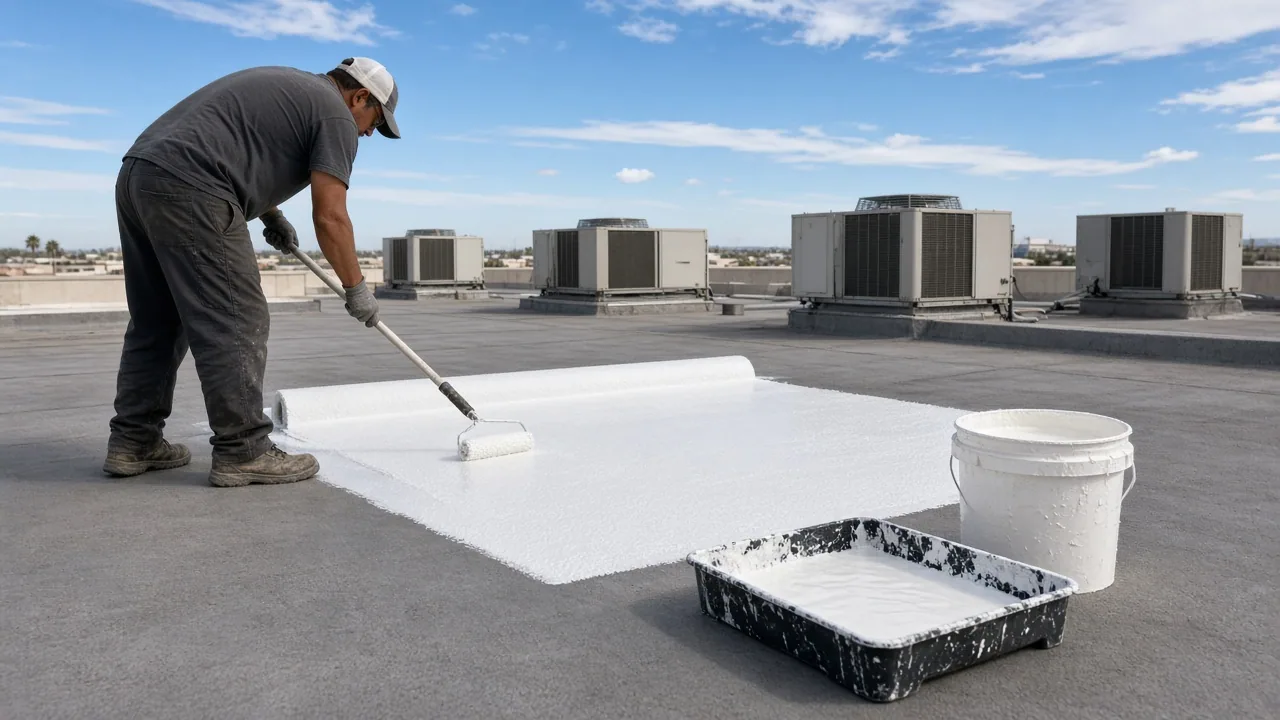
Apply within the weather window | The coating manufacturer’s instructions and project specification set surface, moisture, temperature, primer and application requirements. We divide work into zones, apply material at the specified coverage and record checks required by the project. Acrylic application may need multiple passes to reach the specified film. Each layer must dry as directed before the next operation or a transition is closed. We check the interval between passes, note weather interruption and confirm that repaired flashing remains protected during cure. If a coating is applied too soon over a damp or soft layer, the next pass may not bond as intended. The approved product instructions set the surface readiness and cure conditions for this project. South Florida rain can interrupt application, while summer heat affects crew exposure and surface conditions. We review the forecast and roof surface before starting each area, then protect fresh coating from water or foot traffic until it is ready. The site contact confirms material staging, spray or roller restrictions and occupied spaces. Near Coral Springs Commerce Park, that route and staging remain specific to the property, not the business district name. An acrylic coating needs a suitable dry period for application and cure. We check the forecast for rain and dew, then divide the roof into areas that can be prepared and coated without leaving a vulnerable edge. At transitions, reinforced fabric and additional coats follow the selected product instructions. If ponding remains after ordinary drying conditions, we review the drainage and substrate before coating because persistent water can affect system suitability and should not be concealed by a surface layer. |
Review drainage and ponding | Acrylic coating is not a slope correction. We inspect low areas, scuppers, drain bowls and overflow openings before applying material, then note any obstruction or drainage detail that needs separate work. If water remains in a roof zone, we map the low point and compare it with the visible slope and outlet. The owner can review whether a cricket or drain modification should be included before the coating proceeds. Coral Springs’ wet season brings heavy rain, but a regional pattern does not prove standing water on an individual roof. Ponding-water assessment can review a defined low area. If the base roof has broad deterioration or wet materials, replacement may be more appropriate than applying another coating. We base that comparison on the inspected assembly and authorized testing. |
Record application and coverage | At closeout, we inspect field coverage, repaired seams, curbs, edges, drains and other transitions included in the work. We record areas coated, products used, coverage checks and any conditions that limited application. If a section was excluded or could not dry, the record identifies it. The closeout does not imply that concealed layers were tested unless a test or opening was included in the scope. A roof condition report can preserve photographs and preparation findings. Preventive maintenance can revisit accessible coating edges and flashing details. At an office or industrial property in Sunrise, keep coating preparation findings tied to the roof section and the equipment transitions being restored. Each recommendation remains tied to the inspected property. The property contact receives the coated area, weather window and any return inspection item in writing. |
Commercial Roofing Questions | Can acrylic coating be applied over an old coating?The existing layer, adhesion, moisture and compatibility affect suitability. We inspect the base and identify repairs or testing needed before proposing another coat. Does acrylic coating stop ponding water?A coating does not change the roof slope. We inspect the outlet and low area and identify any drain or cricket correction needed before application. How many coats will the roof need?The system specification sets the number of passes, coverage and drying conditions. We identify those requirements in the scope and record checks required for the project. Can an acrylic roof be coated during rain season?Application needs a suitable dry window and time for layers to dry. We check forecast and surface conditions and sequence zones so fresh material can be protected. What information helps with a coating estimate?Provide the address, previous coating records, roof plans, leak or storm date, access route, operating limits and any drainage or ponding concerns. |
Review the acrylic coating option | Send the property address, previous coating and repair records, leak or storm date, roof access route and operating limits. We can inspect the base, define preparation and document the application scope. Request a Roof Assessment 555-555-5555 |
|
|
REQUEST AN ASSESSMENT
 |